

Search Blog, projects, Service or people.

Contact info

Location
810 Pony Express Rd, Cheyenne, WY 82009

Follow us

Lead Attribution That Improves Sales ROI

Lead Attribution That Improves Sales ROI

Lead Attribution That Improves Sales ROI

Authored by
Admin
Date Released
18, Sep, 2026
Comments
03 Comments

A lead source can look profitable at 9:00 a.m. and become a budget drain by the end of the month. The difference is usually not the number of leads delivered. It is whether the business has lead attribution that connects the original source to contact rate, appointment rate, sale, revenue, and margin.

For organizations buying leads in high-value verticals, that connection is not optional. A mortgage lead, debt settlement transfer, insurance form fill, or merchant cash advance inquiry may generate a sale days or weeks after the first touch. If reporting stops at the lead form, media buyers optimize for cheap submissions while sales teams inherit leads that never convert.

The goal is simple: know what created revenue, then put more budget behind it. The execution takes discipline.

What lead attribution should answer

Lead attribution is the process of assigning credit for a closed deal or qualified opportunity to the marketing activity that helped create it. In a lead-buying operation, the basic question is not which campaign generated the most records. It is which source produced the best profitable outcomes.

A useful attribution system should tell leadership where a prospect came from, when the lead was created, which campaign and publisher generated it, how quickly the lead was contacted, and what happened next. It should also show the economics: cost per lead, cost per contact, cost per qualified opportunity, cost per acquisition, revenue per lead, and return on ad spend.

That last group of metrics changes decisions. A source with a $25 cost per lead may be worse than a $60 source if the cheaper leads produce poor contact rates, duplicate records, weak eligibility, or low close rates. Cheap volume does not lower acquisition cost if the sales team spends its day chasing people who were never likely to buy.

The lead journey is longer than the form fill

Most attribution problems begin when marketing and sales measure different parts of the funnel. Marketing sees leads delivered. Sales sees calls answered, applications completed, policies bound, contracts signed, or funding issued. Finance sees revenue and margin. If those systems do not share a common lead record, every department can claim a different answer.

The full path may include a paid search click, a landing page submission, an SMS confirmation, an inbound live transfer, several call attempts, a sales consultation, and a close. In some verticals, the first source deserves most of the credit because it created demand. In others, the channel that generated the live conversation has the strongest relationship to the sale.

There is no single attribution rule that fits every campaign. What matters is choosing a model that reflects how your buyers actually convert and applying it consistently enough to make budget decisions.

First-touch attribution

First-touch attribution gives all credit to the channel that introduced the lead. It is useful when you need to understand which campaigns create net-new demand. A direct mail response, paid social campaign, or targeted data segment may receive credit under this model.

Its weakness is obvious: it can overvalue the original touch while ignoring the follow-up systems that turned an inquiry into a sale. Use it to evaluate demand creation, not as the only source of truth for revenue allocation.

Last-touch attribution

Last-touch attribution credits the final channel or interaction before conversion. This is common because it is simple to report. It can be useful for evaluating immediate-response campaigns and call-driven offers where the final action has strong intent.

But last touch can make retargeting, branded search, or a final call appear more valuable than the campaign that started the relationship. It is a clean operational view, not always a complete strategic view.

Multi-touch attribution

Multi-touch attribution spreads credit across meaningful interactions. It can provide a more realistic picture when prospects compare options, return through different devices, or need multiple conversations before buying.

The trade-off is complexity. A sophisticated model is not helpful if campaign data is inconsistent, agents do not disposition leads correctly, or closed revenue is never returned to the reporting system. Start with data you trust. A reliable first-touch and last-touch view beats a complicated model built on missing fields.

Build attribution around the sales operation

Lead attribution fails when it is treated as a reporting project owned only by marketing. It is a revenue operations process. The CRM, call platform, lead delivery process, buyer workflow, and finance reporting all need to agree on how a lead is identified and tracked.

Every delivered lead should carry a persistent ID. That ID needs to move through the funnel, from the source platform to the lead delivery system, CRM, dialer, agent disposition, and closed-sale record. Source, campaign, ad group, publisher, offer, landing page, date, and lead type should be captured at creation whenever possible.

For inbound calls and live transfers, call tracking matters just as much as form tracking. The call record should identify the campaign, buyer, transfer time, agent outcome, call duration, and final disposition. A three-minute conversation that becomes a submitted application is materially different from a transfer that disconnects in ten seconds.

Speed-to-lead must sit beside channel performance. A high-intent internet lead contacted in two minutes can have a dramatically different value than the same lead contacted two hours later. If one source is underperforming, do not assume the traffic is the problem until you check response time, call attempt volume, agent availability, and lead routing.

Use sales dispositions that create usable data

Generic dispositions destroy attribution. Labels such as no answer, bad lead, not interested, and follow up tell you very little unless the team uses them consistently.

Sales organizations need a tighter disposition structure that separates invalid data, duplicate leads, ineligible prospects, uncontacted records, contacted but unqualified leads, qualified opportunities, applications, pending deals, closed-won deals, and closed-lost deals. The reason for loss should be captured where it affects source quality: pricing, credit profile, geography, product fit, timing, competitor, or inability to reach the prospect.

This does not mean forcing agents into a long administrative process after every call. The best setup uses a small number of required outcomes and makes them easy to select in the dialer or CRM. The standard is practical: can leadership use the data to decide whether to scale, fix, renegotiate, or stop a source?

Data hygiene also protects vendor relationships. When a buyer can show that a certain campaign generated 500 leads, 72 percent were contacted within five minutes, 110 qualified, and 19 closed, the conversation becomes specific. You can diagnose performance instead of arguing about whether the leads felt good.

Measure lead quality in layers

A lead is not simply good or bad. Quality has layers, and each layer reveals a different operational issue.

At the top of the funnel, review delivery rate, duplicate rate, phone and email validity, geography, and basic qualification criteria. Next, examine contact rate and time to first attempt. Then look at qualified rate, application or appointment rate, close rate, revenue per lead, and margin after media cost, fulfillment cost, and sales labor.

This layered view prevents bad decisions. Low contact rates may point to stale data, poor calling hours, inaccurate phone numbers, or delayed follow-up. Strong contact rates but low qualification can signal an offer-message mismatch or weak targeting. High qualification with low closes can indicate pricing, sales execution, product availability, or underwriting friction.

A single cost-per-lead number cannot diagnose any of that.

How to act on attribution without overreacting

Attribution should drive controlled budget moves, not panic. Campaigns fluctuate. A handful of sales can make a small lead sample look exceptional, while delayed conversions can make a healthy source look weak for a week.

Set a minimum sample size before making major changes. The right threshold depends on your deal value, close cycle, and normal conversion rate. A high-volume insurance campaign may generate enough signal in days. A mortgage or legal campaign may need more time for outcomes to mature.

When performance is clear, act quickly. Scale sources that produce profitable closed business and maintain acceptable lead quality. Reduce spend on sources that fail at a specific funnel stage, but investigate the cause before cutting them entirely. A routing adjustment, revised qualification rule, new call schedule, or better agent matching may recover value that a surface-level report would miss.

Separate source performance from operational performance. If one buyer location contacts leads in three minutes and another contacts them in 45, their attributed ROI should not be compared as if the lead handling were identical. The source supplied the opportunity. Your process determines how much of that opportunity becomes revenue.

Make vendor reporting part of the buy

When purchasing leads, ask for transparency before volume. You need campaign-level source details, delivery timestamps, lead exclusivity rules, return criteria, consent language where applicable, and a workable method for matching outcomes back to the supplier.

The strongest lead partners do not hide behind delivery counts. They help buyers see where performance is holding, where it is breaking, and which variables can be adjusted. That is particularly valuable for multi-channel acquisition, where real-time internet leads, inbound calls, direct mail, targeted data, and aged records will naturally behave differently.

Lead Flow Partners approaches lead supply with that revenue lens: match the delivery channel to the sales motion, track the result beyond the handoff, and keep improving the inputs that affect close rate.

A clean attribution process will not make every campaign profitable. It will do something more valuable: it will show your team exactly where to apply pressure. When revenue is the scorecard, better decisions follow.


Tags: Leads
Share:

Guide to Lead Distribution Rules That Drive Sales

Guide to Lead Distribution Rules That Drive Sales

Guide to Lead Distribution Rules That Drive Sales

Authored by
Admin
Date Released
16, Sep, 2026
Comments
03 Comments

A lead that waits 15 minutes is not the same lead your campaign generated five minutes ago. In high-intent categories such as insurance, finance, legal, solar, and home services, speed is part of lead quality. This guide to lead distribution rules shows how to turn incoming demand into a controlled sales process instead of a race between reps, vendors, and missed calls.

The goal is not to distribute leads evenly. The goal is to put each opportunity in front of the person, team, or system most likely to convert it while the prospect is still ready to talk. That takes clear rules, real-time visibility, and consequences when the process is ignored.

What Lead Distribution Rules Actually Control

Lead distribution rules are the conditions that determine where a lead goes, when it goes there, and what happens if the first recipient does not act. They sit between lead generation and the sales conversation. Without them, paid leads pile up in a shared inbox, get claimed by the loudest rep, or receive duplicate outreach that damages trust before a real sales call happens.

A strong rule set controls more than assignment. It governs eligibility, routing priority, response time, capacity, follow-up, reassignment, and suppression. It also gives leadership a clean way to see whether poor results come from lead quality, campaign targeting, slow contact speed, or weak sales execution.

For lead buyers, this distinction matters. A vendor can deliver qualified prospects at the agreed volume and price, but conversion will still fall if the receiving operation has no disciplined method for handling them. Distribution is not an admin task. It is a revenue control point.

Start With the Economics, Not the Org Chart

Many businesses route leads based on geography or round-robin fairness because those rules are easy to set up. Easy does not mean profitable. A better starting point is the value of the lead, the likelihood of contact, and the cost of delay.

For example, a live transfer for a merchant cash advance buyer should not enter the same queue as a lower-intent aged record. A mortgage prospect with a high credit profile may deserve a specialized closer. An auto insurance lead should move to a licensed agent available in the prospect’s state. The right assignment depends on the product, compliance requirements, prospect profile, and urgency.

Before building automation, define what a converted lead is worth and what you can afford to spend to acquire it. Then work backward. If a lead costs $40 and your historical contact rate drops sharply after five minutes, a 30-minute first-touch standard is not operationally acceptable. The rules must reflect your margin, not your staffing preference.

Build Rules Around Lead Intent and Fit

The most effective lead routing models use a small number of meaningful decision points. Overcomplicated logic can send good leads into the wrong queue or make troubleshooting impossible. Start with the data that changes how a sales team should respond.

At minimum, separate leads by source and intent. A consumer who requested an immediate call, completed a detailed form, or accepted a live transfer should receive priority treatment. Leads from direct mail, real-time web forms, purchased data, and aged files each require a different contact cadence and often a different team.

Next, route based on fit. That can include state, license requirements, product interest, debt amount, credit band, language preference, homeowner status, business revenue, or requested time frame. A broad lead is not automatically a bad lead. It may simply need a team with the right script and product options.

Finally, account for rep capability. Top closers should not receive every lead by default. That creates bottlenecks and leaves the rest of the sales floor underdeveloped. Use performance-based routing for high-value or complex opportunities, while giving capable newer reps a defined segment where they can respond fast and build consistency.

The Core Lead Distribution Rules to Set

A working distribution system should answer a few non-negotiable questions before a campaign goes live: Who can receive this lead? Who gets first priority? How fast must they respond? What happens when they do not? And when should the lead be removed from active circulation?

These are the core rules worth documenting:

  • Eligibility rules: Define who can receive a lead based on license, territory, skill set, product, schedule, and compliance status.
  • Priority rules: Establish whether leads go first to a dedicated agent, a high-performing pod, a live-transfer queue, or a weighted rotation.
  • Capacity rules: Cap assignments when a rep has too many untouched leads, is on a call, or has exceeded a workable daily volume.
  • Response-time rules: Set a required first attempt for each lead type, then track the actual time to first call, text, and disposition.
  • Reassignment rules: Pull leads from inactive recipients automatically. A high-intent lead should never wait for someone to return from lunch or remember to check a dashboard.
  • Duplicate and suppression rules: Stop repeat assignments, honor opt-outs, suppress existing customers where appropriate, and prevent multiple agents from contacting the same prospect.

These rules should be visible to both sales and marketing. If sales leaders cannot explain the logic behind assignment, reps will assume the system is unfair. If marketing cannot see assignment outcomes, it cannot optimize source quality correctly.

Use Round Robin Carefully

Round robin works when leads are similar in value, reps have comparable ability, and response speed is enforced. It is a reasonable baseline for a stable team handling a consistent lead type.

It breaks down when lead quality varies widely or when some reps are consistently slower than others. In that situation, equal distribution can become equal waste. A weighted model is often stronger: reliable closers receive more opportunities, but the weighting is tied to measurable standards such as contact rate, speed to lead, compliance, and issued business, not office politics.

Treat Live Transfers as a Separate Operating Model

Inbound live transfers require their own rules. The prospect is already engaged, so the biggest risk is not delayed callback – it is a poor handoff, a long hold time, or an unavailable agent.

Set minimum staffing coverage, maximum hold thresholds, and overflow procedures before accepting volume. If the primary queue is full, a live transfer should move to a qualified backup team immediately. Sending the call to voicemail or allowing it to ring without answer turns a premium acquisition channel into an expensive missed opportunity.

Speed to Lead Needs a Real Escalation Path

“Call leads quickly” is not a rule. It is a suggestion. A real standard specifies the time allowed, the required actions, and the next step if no action occurs.

For high-intent internet leads, many sales organizations should target an immediate automated acknowledgement followed by a human attempt within minutes. The exact number depends on your vertical, consent language, call center coverage, and lead source, but the principle stays the same: contact probability declines as the prospect’s attention shifts.

Use automated alerts, click-to-call tools, and SMS workflows to reduce friction, but do not confuse automation with a sales conversation. A text can preserve momentum. A qualified live conversation is what creates a chance to close. Require clear dispositions after each attempt so a lead does not remain falsely marked as “new” for hours.

Escalation should be automatic whenever possible. If an agent has not called within the service-level window, reroute the lead. If the agent calls but does not log a disposition, flag it. If a lead is contacted but not reached, place it into the correct multi-touch cadence rather than sending it back into a general queue.

Measure Distribution Performance Before Blaming the Source

When conversion drops, lead quality is often the first suspect. Sometimes that is correct. But teams regularly blame a source when the actual leak is slow response, uneven assignment, weak follow-up, or an overloaded sales floor.

Review performance by source, lead type, assigned rep, queue, daypart, and time to first attempt. Track contact rate, appointment rate, qualified rate, close rate, cost per acquisition, and revenue per lead. One metric alone will mislead you. A source with a lower close rate may still produce better profit if its cost is lower and its volume is scalable.

Pay close attention to reassigned leads. If reassigned leads consistently outperform originally assigned leads, you likely have an accountability problem in the first queue. If they consistently underperform, your reassignment threshold may be too slow. Either finding gives you an operational fix that is more useful than arguing over lead quality.

Lead Flow Partners works with sales-driven organizations where every delay affects acquisition cost. The best campaigns combine qualified demand with a delivery process built to act on it. Generating more volume without fixing distribution only makes the leak larger.

Keep the Rules Tight, Then Improve Them

Do not spend months designing a perfect routing tree. Launch a clear version, monitor the exceptions, and tighten the rules as actual performance data comes in. The right model for a five-person sales team may fail when volume doubles, when a new state is added, or when live transfers become a larger share of the mix.

Review your rules weekly during active growth periods. Look for leads waiting too long, reps receiving more than they can work, qualified prospects routed to the wrong specialty, and sources that perform differently by day or hour. Small routing changes can create a larger lift than another increase in media spend.

Your lead distribution rules should make the next action obvious for every new prospect. When the right rep responds fast, follows the correct process, and ownership is visible, lead flow becomes a system you can scale instead of a cost you hope will convert.

Tags: Leads
Share:

Inbound Transfers Versus Web Forms for Lead ROI

Inbound Transfers Versus Web Forms for Lead ROI

Inbound Transfers Versus Web Forms for Lead ROI

Authored by
Admin
Date Released
14, Sep, 2026
Comments
03 Comments

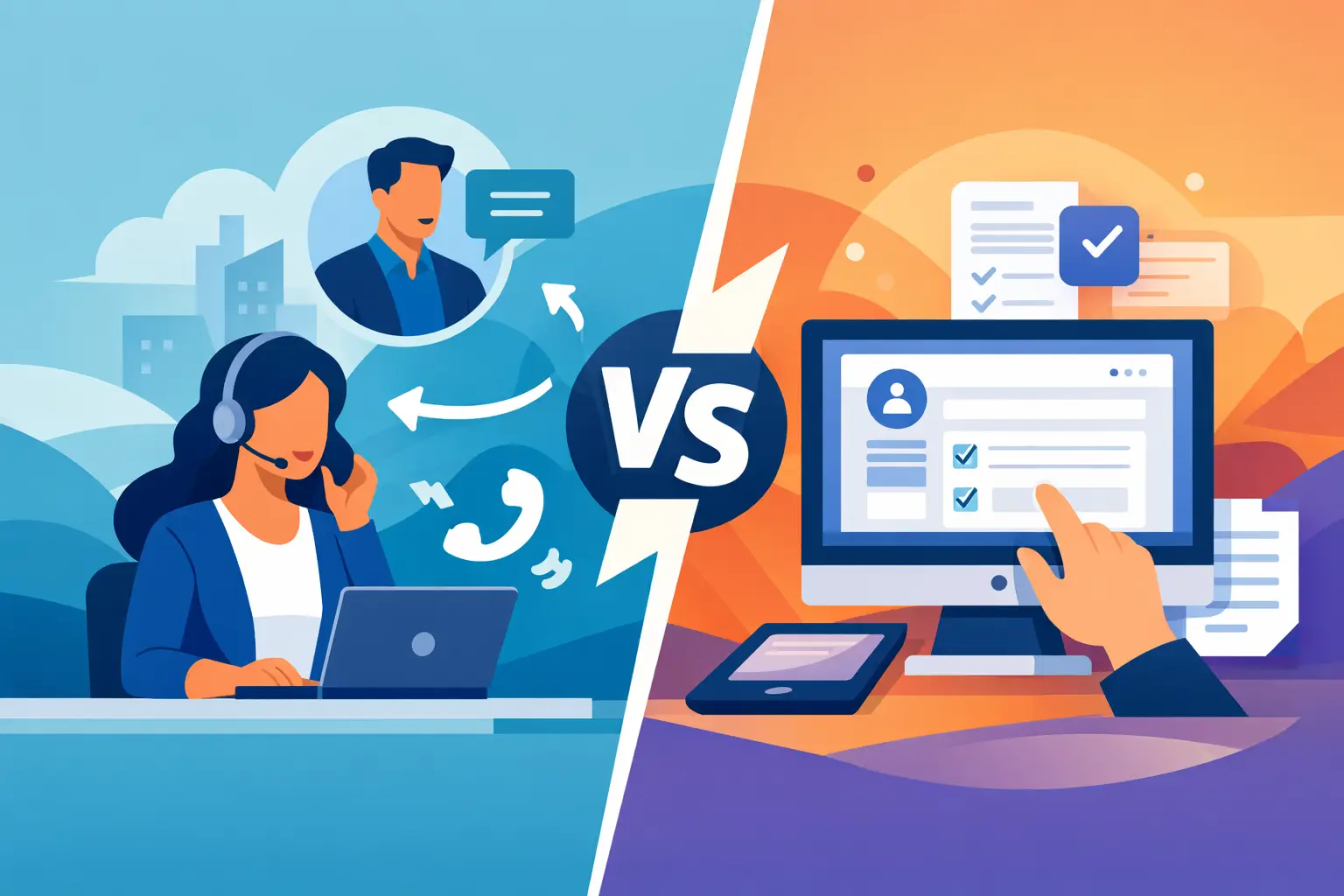
A prospect hits submit at 2:15 p.m. By 2:16, they are comparing competitors, ignoring unknown calls, or moving on with their day. That single minute is why the inbound transfers versus web forms decision matters far more than the price shown on a lead vendor’s rate card. The better channel is the one that puts qualified intent in front of a prepared sales team at a cost your unit economics can support.

For lead buyers in insurance, finance, legal, home services, and other high-value verticals, this is not a branding decision. It is a production decision. You need to know how quickly the lead can be worked, what level of intent is present, how much control your team has over the conversation, and what happens after delivery.

Inbound Transfers Versus Web Forms: The Core Difference

Inbound live transfers connect a prospect to your sales floor while that person is actively engaged. The consumer responds to an offer, completes an initial qualification path, and is transferred to an agent in real time. Your team gets the opportunity to build rapport, verify information, address objections, and move toward a close before the prospect’s attention shifts.

Web forms create a record first and a conversation later. A consumer fills out a form, and the resulting lead is delivered through a CRM, email, API, or lead portal. Your sales team then attempts contact through calls, text messages, emails, and follow-up sequences. The model can generate volume efficiently, but it introduces a delay between expressed interest and a live sales conversation.

Neither channel is automatically superior. The right choice depends on your sales capacity, speed-to-lead discipline, close rates, compliance requirements, and margins. A cheap web lead is expensive when no one answers the phone. A high-cost transfer is expensive when agents are unavailable or unable to convert qualified callers.

Why Live Transfers Usually Produce Faster Sales Motion

The primary advantage of an inbound transfer is immediacy. The prospect has already taken action and is on the phone now. There is no contact-rate problem to solve because the contact has already happened. Your agent starts at the part of the funnel where selling can begin.

That creates a meaningful edge in verticals where urgency drives conversion. A consumer looking for health coverage, debt relief, auto insurance, mortgage options, or business funding may speak with several providers in a short window. Being first to have a real conversation often matters more than having the lowest cost per lead.

Live transfers also provide cleaner operational feedback. If calls are being answered, managers can hear objections, measure agent performance, identify qualification gaps, and adjust scripting quickly. The sales floor sees the market in real time rather than trying to interpret why form leads are not responding three days later.

The trade-off is cost and capacity. Transfers generally carry a higher upfront price because the prospect has reached a more valuable stage of engagement. They also demand coverage. If your agents miss calls, place consumers on hold, or lack the skill to control the conversation, you will burn through high-intent opportunities quickly.

Where Web Forms Create an Advantage

Web forms are often the better choice when your organization has strong follow-up infrastructure and needs scale. They can support a larger lead volume at a lower initial cost, especially when your team can work each inquiry with automated text messages, rapid dialing, email sequences, and multiple attempts across the first several days.

They also give sales organizations more scheduling flexibility. A lead submitted after hours can enter a structured workflow and receive outreach when your team is available. For businesses with limited live coverage, a web form program may be more practical than paying for calls that cannot be answered immediately.

Forms can be particularly effective when the buying cycle is longer. A mortgage shopper, a commercial funding prospect, or a consumer researching a major home improvement may need several conversations before making a decision. In these cases, a disciplined nurture process can turn a lower-cost inquiry into profitable business.

But volume does not fix weak follow-up. If your first contact attempt happens 30 minutes after submission, if agents only call once, or if leads are pushed into a generic queue without ownership, web forms will underperform. The lead did not fail. The response system failed.

Compare Cost Per Acquisition, Not Cost Per Lead

The most common mistake in inbound transfers versus web forms is comparing only the delivery price. That is not the metric that pays payroll or funds growth. The real comparison is cost per issued policy, funded deal, retained client, or completed sale.

A $25 web lead may look attractive against a $90 transfer. But if only 35% of web leads are contacted, 12% of those contacts become appointments, and a fraction of appointments close, the actual acquisition cost can rise quickly. A higher-priced transfer can be more profitable when a live agent speaks with nearly every caller and converts at a materially stronger rate.

Your analysis should account for four operational inputs:

  • Contact rate: How many delivered prospects reach a real sales conversation?
  • Conversion rate: How many conversations become sales or qualified next steps?
  • Labor cost: How much agent time is required to work each acquired customer?
  • Lead fallout: How many opportunities are unreachable, unqualified, duplicated, or no longer interested?

Transfers typically reduce fallout at the top of the funnel. Forms can reduce acquisition cost and increase total opportunity volume. The winning channel is the one that produces stronger contribution margin after lead cost, payroll, technology, cancellations, and chargebacks are included.

Match the Channel to Your Sales Floor

Choose inbound transfers when speed is central to the sale, your agents are staffed to take calls, and your offer benefits from a guided conversation. They are a strong fit for call centers that can answer consistently, have trained closers, and need immediate opportunities rather than a backlog of records to chase.

Transfers also work well when qualification is complex. If a prospect must be screened for location, income, insurance status, vehicle information, credit profile, debt amount, or service eligibility, a short pre-screen before the handoff can protect agent time and improve the quality of conversations.

Choose web forms when your organization has a proven contact strategy, meaningful outbound capacity, and a system for working leads beyond the first call. They can be the better channel for agencies or sales teams that excel at persistence, run effective SMS workflows, and can manage larger volumes without letting fresh inquiries sit untouched.

There is also a middle ground. Many high-performing buyers use both channels intentionally. Transfers feed agents who need live conversations now. Web forms create a pipeline for follow-up teams, appointment setters, and automated nurture campaigns. This approach gives you immediate revenue opportunities without relying on one source of demand.

Delivery Quality Matters More Than the Label

Not every transfer is truly exclusive, qualified, or live. Not every web form is fresh, complete, or generated from meaningful consumer intent. Before scaling either channel, define exactly what you are buying.

For transfers, confirm the qualification criteria, transfer timing, exclusivity rules, call recording availability, geographic coverage, hours of operation, and any replacement policy for disconnected or ineligible calls. Ask how the consumer was acquired and whether the offer aligns with your product and compliance standards.

For web forms, establish freshness requirements, deduplication rules, consent language, source transparency, required fields, delivery speed, and whether leads are exclusive or shared. A lead record with incomplete data and vague consent language creates conversion problems and compliance exposure at the same time.

Lead Flow Partners approaches delivery as part of the sales process, not a handoff that ends at the invoice. That means aligning lead type, qualification criteria, routing, and available sales capacity before pushing for volume. More leads are not the objective. More profitable conversations are.

Build the Operating System Before You Scale

The channel choice only works when your operations are ready for it. A transfer campaign requires agent availability, clear scripts, defined dispositions, and real-time reporting on answer rates and outcomes. If your team cannot take a call within seconds, reduce volume or change the routing structure before expanding spend.

A form campaign requires even more discipline after delivery. Set a non-negotiable speed-to-lead standard, assign ownership immediately, use compliant text and email follow-up, and measure contact attempts through to sale. Managers should be able to see which sources create conversations, not just which sources fill the CRM.

Test with enough volume to identify patterns, but do not confuse testing with passive observation. Review call outcomes, qualification failures, agent notes, contact rates, and close performance weekly. Then shift budget toward the source, time window, and lead type that produces profitable customer acquisition.

The most valuable lead is not the one that arrives at the lowest price. It is the prospect your team can connect with, advise correctly, and convert before a competitor gets the conversation. Build around that reality, and both transfers and web forms can become reliable engines for growth.

Tags: Leads
Share:

Why Mortgage Leads for Sale Are Important for Growing Mortgage Companies?

Shared Versus Exclusive Leads: Which Pays?

Why Mortgage Leads for Sale Are Important for Growing Mortgage Companies?

Authored by
Admin
Date Released
12, Sep, 2026
Comments
03 Comments

Finding the right borrowers is one of the biggest challenges for mortgage professionals. A steady flow of interested prospects can help loan officers and mortgage companies build stronger sales pipelines and close more deals. This is where reliable Mortgage Leads can make a difference.
At Lead Flow Partners, businesses can access targeted leads designed to connect mortgage professionals with people looking for home financing solutions. Whether you want fresh prospects or a larger pool of potential clients, having the right lead source can help you spend less time searching and more time talking with qualified borrowers.
Why Mortgage Leads Matter for Loan Professionals
The mortgage industry depends on strong customer connections. Every homebuyer has different needs, from first-time buyers to people looking to refinance their current loans. Reaching these customers at the right time can improve your chances of turning inquiries into closed loans.
Buying mortgage leads gives lenders access to people who have already shown interest in mortgage services. These leads help loan officers focus their efforts on prospects who are more likely to need their help.
Without a steady source of leads, mortgage professionals often rely on referrals or cold outreach. While these methods can work, they may take more time and effort. A trusted lead provider helps create new opportunities and keeps your sales process active.
Buy Mortgage Leads That Match Your Goals
Every mortgage business has different needs. Some lenders may want more first-time homebuyers, while others may focus on refinance customers or homeowners looking for better loan options.
When you choose to Buy Mortgage Leads, you gain access to a wider group of potential clients. Quality leads can help you reach people who are already interested in mortgage products and are searching for guidance.
Lead Flow Partners helps mortgage professionals connect with consumers who are looking for loan solutions. Their lead services are built to support lenders who want to grow their customer base and improve their outreach.
The Benefits of Mortgage Leads for Sale
Choosing Mortgage Leads for Sale can help your business maintain a steady flow of new prospects. Instead of spending hours trying to find potential borrowers, you can focus on building relationships and helping customers through the loan process.
Some key benefits include:
• Access to new borrower opportunities
• More time for customer conversations
• Better sales planning
• Support for business growth
• A simple way to expand your client list
A consistent lead supply allows mortgage professionals to create a more reliable sales routine. It also helps businesses reach more customers who may need their services.
Connect With Borrowers at the Right Time
Timing plays a major role in mortgage sales. People who are searching for loan options often want quick answers and helpful support. Reaching them early can help you build trust before they contact another lender.
Quality mortgage leads give you the chance to start conversations with potential borrowers when they are actively exploring their options. A quick response and helpful advice can turn an inquiry into a long-term customer relationship.
Choose a Reliable Mortgage Lead Provider
Not all leads offer the same value. Good mortgage leads should come from people who have a real interest in mortgage services. Working with a trusted provider helps you avoid wasting time on low-quality contacts.
Lead Flow Partners focuses on providing mortgage professionals with lead solutions that support their sales goals. Their services help lenders reach more potential borrowers and create new chances for growth.
Grow Your Mortgage Business With Better Leads
A successful mortgage business needs a strong connection with customers. Having access to the right prospects can help loan officers improve their sales efforts and build a larger client base.
Whether you are a mortgage broker, loan officer, or lending company, investing in quality Mortgage Leads can help you find more opportunities. With the option to Buy Mortgage Leads and explore Mortgage Leads for Sale, you can create a better path to reaching future borrowers.
Choose a lead partner that understands your goals and helps you connect with people who are

Tags: Leads
Share:

A Guide to Transfer Call Campaigns That Convert

A Guide to Transfer Call Campaigns That Convert

A Guide to Transfer Call Campaigns That Convert

Authored by
Admin
Date Released
10, Sep, 2026
Comments
03 Comments

A live transfer can become the highest-value lead in your pipeline or the fastest way to burn through agent capacity. The difference is not the call itself. It is the campaign design behind it. This guide to transfer call campaigns is built for teams that need more conversations with qualified prospects, tighter control over acquisition cost, and a sales floor that can actually convert the demand being delivered.

Transfer campaigns work because they remove the delay between a prospect raising their hand and a sales rep responding. But speed alone does not create revenue. Qualification standards, routing rules, availability, compliance, and call handling all determine whether a transfer turns into an application, appointment, policy, funded deal, or sale.

Start With the Revenue Event, Not the Call Volume

The wrong way to launch a transfer campaign is to ask for as many calls as possible and judge success by the price per call. Cheap calls can be expensive if they produce weak contact rates, poor close ratios, or agent downtime spent disqualifying prospects.

Start by defining the revenue event that matters. For an insurance buyer, it may be a bound policy. For mortgage, debt settlement, legal, solar, or funding teams, it may be a completed application, qualified consultation, funded file, or closed deal. Work backward from that event to establish what a qualified caller looks like.

Your criteria should cover the essentials: geography, product need, age or eligibility requirements, ownership status where relevant, credit or income thresholds, requested loan amount, debt amount, timeframe, and consent. Not every vertical needs every filter. The point is to separate a real buying opportunity from a generic consumer inquiry before the call reaches your team.

A strong campaign also defines disqualifiers upfront. If you cannot service certain states, customer profiles, products, or credit bands, make that clear before launch. Paying for calls your team cannot work is not a lead-quality issue. It is an execution issue.

Build Qualification That Protects Your Agents

Transfer call qualification should be specific enough to protect your sales floor but not so restrictive that it chokes volume and drives up cost beyond profitability. That balance changes by vertical, margin, sales cycle, and close rate.

For example, a high-ticket financing campaign may justify deeper verification before transfer because every agent conversation carries significant labor cost and underwriting complexity. A fast-moving insurance campaign may prioritize speed, basic eligibility, and intent because the agent can complete detailed quoting on the call.

Ask every lead supplier the same operational questions. What questions are asked before transfer? Is the prospect actively requesting help, or simply responding to an ad? Are calls screened by a live representative, an IVR, or a form submission? How is duplicate activity handled? What happens when a prospect declines the transfer or drops before connection?

The answers reveal whether you are buying true inbound intent or simply paying for a call connection. A transfer is valuable when the consumer understands why they are being connected, has agreed to speak with a provider, and meets the criteria your team needs to work the opportunity.

Use a Clear Definition of a Billable Call

Ambiguity creates disputes, weak reporting, and vendor frustration. Establish the billable event before traffic starts. It may be a live, connected caller who meets your agreed qualification criteria and remains on the line for a minimum duration. It may also include a defined grace period for accidental disconnects or technical failures.

Do not use call length as the only measure of quality. A short call can still be highly qualified if the prospect reaches a capable agent and converts quickly. At the same time, duration data is useful for spotting problems. Extremely short calls may indicate poor handoffs, misaligned expectations, or routing failures. Long calls with low conversion may point to weak scripts, a poor offer, or an agent training gap.

Control Routing Before You Scale

A transfer campaign is only as good as its delivery logic. If calls arrive when no one is available, your conversion rate drops before the sales conversation begins. Missed calls also damage the consumer experience. A prospect who asked for help and reached a dead end is less likely to answer a follow-up later.

Set operating hours that match your actual agent coverage, not the hours you wish you could cover. Include holiday schedules, overflow rules, state-specific timing restrictions, and clear instructions for after-hours traffic. If your sales team has inconsistent availability, start with narrow delivery windows and expand only after performance is stable.

Routing should account for capacity in real time. The best setup directs calls to available agents, prevents overloading top performers, and provides a defined overflow path when queues build. That can mean a backup sales group, a callback workflow, or pausing delivery until capacity returns. Letting calls ring endlessly is not an overflow strategy.

Lead Flow Partners approaches transfer delivery with the operational reality of the sales floor in mind: qualified prospects need to reach ready agents, not sit in a queue while ad spend keeps running.

Decide Between Exclusive and Shared Calls

Exclusive calls give one buyer the opportunity to work the prospect. They generally offer more control, cleaner attribution, and a better chance to build trust without competing outreach. They also cost more, and they require your team to be ready when the call hits.

Shared calls can be useful when speed matters, margins are tighter, or your team is testing a new offer. The trade-off is competition. If multiple buyers can pursue the same prospect, your first-contact speed, sales discipline, and offer positioning matter even more.

Neither model is automatically better. Exclusive delivery usually makes sense when you have a proven sales process and strong lifetime value. Shared volume can make sense when you need reach and can move faster than the market. Buy based on unit economics, not preference.

Prepare Agents for the Handoff

The transfer handoff is a conversion moment, not an administrative step. The prospect should not feel as if they have been passed around or forced to repeat everything they just said.

Give agents a concise call context before they answer whenever possible: the campaign source, product requested, answers to screening questions, location, and any known qualification details. Then train the opening. A confident agent should acknowledge the reason for the call, confirm the consumer’s need, and move directly into the next meaningful step.

Avoid generic openings such as, “How can I help you?” The caller already stated why they need help. A better approach is to confirm the request: “I understand you are looking for options to reduce your monthly payment. I can help you review what you may qualify for.” That reinforces relevance and keeps momentum.

Your script should have structure, not rigidity. Agents need approved language for compliance-sensitive disclosures, objection handling, verification, and transitions. They also need permission to sound human. In high-intent campaigns, a delayed or robotic opening can waste the advantage you paid to create.

Measure the Full Funnel, Not Just Cost Per Transfer

Cost per transfer is a buying metric. It is not a profitability metric. The calls that look cheapest at the top of the funnel can become the most costly once agent labor, contact failures, fallout, and low close rates are considered.

Track performance from source to sale. At minimum, measure connected calls, qualified calls, agent answer rate, transfer duration, application or appointment rate, close rate, revenue per call, and customer acquisition cost. If your sales cycle extends beyond the initial call, connect campaign data to CRM outcomes so you can see downstream approvals, funding, retention, and lifetime value.

Review results by source, daypart, state, qualifier response, agent, and offer. This is where optimization becomes practical. You may find that one source drives lower transfer volume but produces substantially higher funded deals. Or that a particular time block creates plenty of conversations but poor answer rates because your team is handling another channel.

Do not rush to kill a campaign after a small sample. At the same time, do not keep buying traffic because a vendor report looks good while closed revenue says otherwise. Set a testing period, agree on sample-size expectations, and make decisions with enough data to distinguish a bad day from a bad source.

Keep Compliance Inside the Campaign Design

Compliance cannot be bolted on after volume arrives. Transfer campaigns operating in regulated categories need clear consent standards, accurate marketing claims, approved scripts, recording practices where applicable, and state-specific operating rules.

Your marketing message must match the call experience. If an ad promises a quote, consultation, debt review, coverage option, or financing evaluation, the agent needs to deliver that next step without changing the offer midway through the conversation. Misalignment drives complaints, drops, and poor conversion.

Work with your legal and compliance teams to define acceptable language, disclosures, documentation, and suppression requirements before launch. Then monitor calls regularly. Call recordings are not just for dispute resolution. They show where consumers get confused, where qualifiers are too loose, and where agents are leaving revenue on the table.

Scale Only After the Process Holds

Once a campaign produces profitable sales at a controlled volume, scaling becomes a capacity question. Can your team answer more calls? Can training keep pace? Does the vendor have enough quality supply in the geographies and hours you need? Will your close rate hold as sources expand?

Increase volume in measured steps and watch conversion rates closely. If cost per transfer rises slightly while revenue per call rises faster, that can be a winning trade. If volume climbs but agent answer rates or close rates fall, fix the operation before buying more calls.

The goal is not to purchase the most transfers. It is to build a call campaign that creates consistent, measurable opportunities your sales team can convert. When qualification, routing, agent readiness, and reporting are working together, every live conversation has a clear job: move a qualified prospect closer to revenue.

Tags: Leads
Share:

Best Call Center Lead Scripts That Convert

Best Call Center Lead Scripts That Convert

Best Call Center Lead Scripts That Convert

Authored by
Admin
Date Released
08, Sep, 2026
Comments
03 Comments

A lead can look perfect in a dashboard and still die in the first 20 seconds of a call. The best call center lead scripts prevent that waste by giving agents a controlled way to establish relevance, qualify intent, and earn the right to move forward. They are not rigid speeches. They are conversion frameworks built for speed.

For teams buying live transfers, real-time internet leads, targeted data, or aged leads, the script has one job: turn paid opportunities into productive sales conversations. Every unnecessary question, weak opener, or premature pitch raises acquisition cost. Every clear transition improves the odds of contact, qualification, and close.

What the Best Call Center Lead Scripts Actually Do

High-performing scripts do not try to force a sale on the first sentence. They establish context, confirm the prospect’s reason for engaging, and guide the call toward a defined outcome. That could be a completed application, a warm transfer, a scheduled appointment, or a verified quote opportunity.

The structure should change based on lead source. A live transfer requires immediate control because interest can fade fast. A fresh web lead needs a fast reference to the form or offer they requested. An aged lead needs a lower-pressure reactivation approach because the prospect may not remember the original inquiry.

The common mistake is using one generic script across every campaign. Auto insurance, debt settlement, merchant cash advance, solar, and mortgage all have different buying triggers, compliance considerations, and qualification criteria. The framework can stay consistent. The language, questions, and next step should not.

Start With an Opener That Earns Attention

The first line should answer the prospect’s unspoken question: Why are you calling me, and why should I stay on the phone?

For inbound and recent web leads, specificity wins. Avoid vague introductions such as, “I’m calling to see if you need help.” That forces the prospect to do the work of remembering why they engaged. Instead, anchor the call to their action.

Fresh internet lead opener

“Hi [First Name], this is [Agent] calling about the [coverage/financing/relief] request you submitted. I have a couple of quick details to confirm so I can point you to the right option. Do you have two minutes now?”

This works because it names the reason for the call, sets a low time commitment, and positions the next questions as useful to the prospect.

Live transfer opener

“Hi [First Name], you’re connected with [Agent]. I understand you’re looking into [specific need] today. Before I make a recommendation, let me confirm a few details so we do not waste your time.”

A live transfer is not a permission slip to launch into a pitch. Confirm the need first. The prospect has already taken action, but they still need confidence that the next person understands their situation.

Aged lead reactivation opener

“Hi [First Name], this is [Agent]. You had previously looked into [offer category], and I wanted to see whether that is still something you are evaluating or if your situation has changed.”

This script is direct without pretending the inquiry happened yesterday. It gives the prospect an easy way to re-engage, decline, or explain what changed. That honesty often performs better than an overly polished opener.

Qualify for Fit, Not Just for Contact

A phone number and a completed form do not equal a qualified opportunity. Strong qualification protects agent time and keeps sales teams focused on prospects who can realistically move forward.

Ask questions in a sequence that feels natural. Start broad, narrow based on the answer, and explain why you need sensitive information when relevant. The agent should be collecting only the information needed to determine fit and advance the sale.

For example, a funding campaign might use this progression:

“What are you looking to accomplish with the capital?”

“How long has the business been operating?”

“About what does monthly revenue typically look like?”

“Are you looking to move quickly, or are you comparing options for later?”

The last question matters. Urgency is often as valuable as eligibility. A qualified prospect with no timeline may belong in nurture. A prospect with a defined need and immediate timeline deserves priority routing.

For insurance, finance, legal, and debt-related campaigns, agents also need to follow approved disclosures, consent requirements, and data-handling procedures. A script can improve conversion, but it cannot override compliance. Build required language into the natural flow instead of treating it as an awkward interruption at the end.

Use the Bridge Before the Pitch

Agents lose prospects when they move from discovery to presentation without a transition. The prospect shares a problem, then suddenly hears a product pitch that could have been delivered to anyone. Use a bridge that proves the agent listened.

Try this structure: confirm the need, connect it to a relevant solution, then ask for the next step.

“Based on what you shared, the biggest priority is lowering the monthly payment without adding unnecessary delays. We may have an option that fits that goal. Let me verify [key item], and then I can walk you through the next step.”

That language is more effective than saying, “Great, let me tell you about our program.” The difference is relevance. Prospects move when they believe the conversation is tailored to their stated problem.

Objection Scripts That Keep the Call Moving

Objections are not always rejections. Many are requests for clarity, control, or proof. The goal is not to argue. It is to identify what is behind the objection and lower the friction around the next action.

“I’m just looking.”

“That makes sense. Most people compare options before making a decision. What are the one or two things you want to make sure any option includes?”

This shifts the call back to discovery. It can reveal price sensitivity, eligibility concerns, timing, or distrust from past sales calls.

“Send me some information.”

“I can do that. To make sure I send information that actually applies to you, let me confirm two quick details first. Then I can send the right next step instead of generic material.”

Do not treat this as a win by default. If an agent sends information without confirming intent or fit, the lead often disappears into a crowded inbox. Earn a micro-commitment before ending the call.

“I need to think about it.”

“Absolutely. Usually when someone wants to think it over, it comes down to the payment, the timing, or whether the option is the right fit. Which part would you like to think through?”

This is not pressure. It is a direct attempt to surface the real barrier. If the issue is legitimate, the agent can address it or set a credible follow-up. If the prospect has no active need, the team can stop spending expensive call time on a low-probability opportunity.

“I already have someone helping me.”

“Good. It sounds like you are taking the decision seriously. Are you already approved and moving ahead, or are you still comparing terms and options?”

Competition is not automatically a dead end. In high-value verticals, buyers frequently talk to multiple providers. The right question determines whether there is still a real chance to compete.

Close for the Next Commitment, Not the Entire Deal

A call center script should close at the level appropriate to the campaign. Trying to close a complex financial product in one conversation can reduce trust. On the other hand, ending a high-intent transfer with “We’ll follow up sometime” wastes demand that was expensive to generate.

Use a clear, specific close:

“The next step is to complete the short verification so we can confirm what you qualify for. It takes about five minutes. Are you ready to do that now?”

Or, for an appointment-based sales process:

“I have a specialist available at 3:30 or 5:00 today. Which time gives you the best chance to review the options without interruption?”

Specificity creates momentum. A vague close creates another opportunity for the prospect to delay.

Build Scripts Around Lead Source and Disposition Data

The best script on paper is useless if your team cannot see where conversations break down. Track dispositions that explain the outcome: no answer, wrong contact, no current need, not qualified, price objection, duplicate lead, appointment set, application started, and sale.

Then review call recordings against those outcomes. If agents are getting early hang-ups, test the opener. If qualification rates are weak, review targeting and lead filters before blaming the script. If qualified prospects fail to advance, examine the bridge and close.

This is where lead quality and call handling meet. Better leads give agents more real opportunities. Better scripts extract more value from each opportunity. Lead Flow Partners approaches acquisition with that same performance standard: create demand, connect with intent, and convert it through disciplined execution.

Treat your script as a revenue asset, not a document your agents read once during onboarding. Test one section at a time, measure the outcome that matters, and keep the language close to how your best closers actually speak. When every paid lead has a cost, the next conversation deserves a script built to produce a result.

Tags: Leads
Share:

Live Transfers Versus Web Forms: Which Wins?

Live Transfers Versus Web Forms: Which Wins?

Live Transfers Versus Web Forms: Which Wins?

Authored by
Admin
Date Released
07, Sep, 2026
Comments
03 Comments

A prospect asks for a quote, checks eligibility, or calls after seeing your ad. What happens in the next five minutes often matters more than the creative, landing page, or bid strategy that produced the lead. That is the real business case behind live transfers versus web forms. One channel puts an interested consumer in front of a sales rep now. The other captures information and puts your follow-up process to work.

Neither format wins in every situation. The right choice depends on your sales capacity, response-time discipline, ticket size, compliance requirements, and ability to turn interest into a completed application or sale. The wrong choice creates a familiar problem: you pay for demand, then lose it before your team makes contact.

Live Transfers Versus Web Forms: The Core Difference

A web form lead is a consumer who submits contact details through a landing page, quote flow, or lead form. Your team receives the information and attempts contact by phone, SMS, email, or a sequence of all three. The buyer controls the follow-up process, but also inherits every risk that comes with it: delayed outreach, incorrect information, duplicate submissions, and declining intent.

A live transfer is an active call connected to your sales team while the prospect is already engaged. Depending on campaign requirements, the consumer may be screened for geography, product fit, credit criteria, ownership status, income, coverage needs, or other qualification points before the call reaches your floor. Your rep starts the conversation when the prospect is available, aware of the offer, and expecting to speak with someone.

That difference changes the sales equation. A web form gives you a record of intent. A live transfer gives you a conversation during the highest-intent window.

Contact Speed Is a Revenue Variable

For high-consideration products such as debt settlement, insurance, mortgage, merchant cash advance, tax relief, legal services, and auto finance, lead decay is fast. Consumers compare providers, get interrupted, second-guess the decision, or simply stop answering unknown numbers. A form submitted at 10:00 a.m. may be materially less valuable by noon if competitors have already called.

Live transfers remove much of that decay. There is no queue for a sales development rep to work through and no hope that a voicemail or first text earns a reply. The prospect is on the phone. Your job is to take control of the conversation, confirm the need, and move toward the next commitment.

That does not mean a transfer automatically converts. A poorly handled transfer can burn budget faster than a form lead. If calls sit in a queue, agents sound unprepared, or the opening does not match the consumer’s expectation, the advantage disappears. Transfer campaigns demand real-time operational readiness, not just a bigger media budget.

Web forms can still perform exceptionally well when your sales operation has fast response standards. Teams that call within minutes, use compliant SMS follow-up, make multiple attempts, and track outcomes by source can turn form submissions into profitable volume. The issue is that very few organizations execute that workflow consistently at scale.

Compare Cost Per Lead to Cost Per Sale

A web form usually has a lower upfront price than a live transfer. That makes it attractive on a dashboard built around cost per lead. But low CPL is not the goal. Cost per funded deal, bound policy, signed client, or completed sale is what determines whether a channel deserves more budget.

Consider a simple scenario. A web form costs less, but only a portion of leads answer the phone and an even smaller percentage reach a qualified conversation. A higher-priced live transfer may generate fewer total records, yet produce more conversations per dollar spent. If the close rate is materially stronger, the transfer can deliver a lower customer acquisition cost even with a higher initial price.

The math should include more than lead price. Account for agent talk time, outbound dialing labor, lead aging, duplicate leads, no-contact rates, compliance review, chargebacks, and the revenue value of a faster sales cycle. In a competitive vertical, speed can also protect margin. Closing a motivated buyer before they collect three more quotes has financial value that does not show up in a CPL report.

Where Web Forms Have the Advantage

Web forms are not a fallback channel. They are often the smarter choice when you need scale, detailed data capture, or lower acquisition costs on prospects who require a longer nurture path.

They work well for campaigns where a consumer needs time to research, gather documents, discuss a decision with a spouse, or evaluate a complex offer. Mortgage, solar, legal, and certain financial services campaigns may benefit from collecting specific data before a specialist engages. A well-built form can pre-qualify the prospect, route them to the right team, and trigger immediate follow-up without forcing a phone conversation too early.

Forms also give marketers more flexibility. You can test messaging, optimize completion rates, capture consent, collect fields that support routing, and build a follow-up audience. That data is useful when your team has a strong CRM, disciplined workflows, and the capacity to work leads across several days or weeks.

The trade-off is simple: form volume does not equal sales opportunity. If a lead sits untouched or enters a generic follow-up sequence, the campaign is feeding your competitors as much as your sales team.

Where Live Transfers Earn Their Premium

Live transfers are strongest when urgency, immediate eligibility, and human conversation drive the sale. They are especially valuable for sales organizations that already have trained closers, defined call availability, and a clear process for moving prospects from initial interest to application, enrollment, or consultation.

Insurance shoppers seeking a same-day quote, consumers exploring debt options, business owners seeking funding, and drivers looking for auto warranty coverage often want answers now. A transfer lets your rep address objections while the reason for the inquiry is still fresh. It also gives the sales team context that outbound dialing rarely provides: the consumer has intentionally requested help and is present for the call.

Transfers can also improve quality control. Campaigns can include qualification rules before connection, such as state availability, age, vehicle ownership, debt amount, business revenue, or product need. Qualification does not eliminate every unworkable call, and vendors should be honest about that. It does, however, reduce the amount of sales labor spent chasing prospects who were never a fit.

The operational requirement is non-negotiable. You need enough agents to answer promptly, clear hours of operation, accurate dispositioning, and a process for overflow. Buying live calls without call-center capacity is like paying for appointments and leaving the office locked.

The Hidden Constraint: Your Sales Team

Channel selection should start with an internal audit, not a vendor pitch. Ask how quickly your team contacts a form lead, what percentage of records become live conversations, how many agents are available by hour, and where calls or leads are being lost. Review close rates by source, not only by campaign. A form lead from one source may outperform a transfer from another if the offer, qualification, or sales handling is stronger.

Then look at your sales motion. If your reps are appointment setters who need to qualify, educate, and schedule a later consultation, forms may provide enough opportunity at a more efficient cost. If your reps are closers who perform best in active conversations, transfers may create better unit economics.

The best answer is often a controlled mix. Use web forms to create scalable top-of-funnel volume and support remarketing or nurture. Use live transfers for high-intent consumers, peak call-center hours, and offers where fast engagement directly improves close rates. Measure each channel against the same revenue outcome, then shift budget based on actual performance.

Build the Right Measurement Framework

Do not let one metric decide the channel. Track form leads from submission through contact, qualification, appointment, application, and sale. Track transfers from connection through talk time, qualification, disposition, application, and sale. This exposes whether a problem sits with traffic quality, lead screening, agent performance, or follow-up execution.

Four numbers deserve constant attention: contact rate, qualified conversation rate, close rate, and cost per sale. For recurring-revenue or high-ticket offers, add retention, cancellation, funded status, and lifetime value. A source that closes quickly but produces weak retention is not necessarily profitable.

Vendor transparency matters here. You need to know lead source, delivery timing, qualification logic, exclusivity terms, geographic coverage, replacement policies, and how duplicates are handled. If reporting stops at delivered leads or connected calls, you cannot make informed scaling decisions.

Lead Flow Partners approaches delivery as a revenue system, combining real-time internet leads and inbound live transfers with the campaign infrastructure sales-driven teams need to evaluate performance beyond surface-level volume.

Choose the Format That Matches the Moment

If your team can answer immediately and close effectively on the phone, live transfers can turn intent into revenue before it cools. If you need broader volume, deeper intake data, and a nurture process your team can execute quickly, web forms can produce efficient pipeline at scale.

Do not buy either channel because the lead price looks attractive. Buy the channel your operation can convert, measure it against closed revenue, and fix the handoff before adding more spend. The prospect has already raised their hand. Your advantage comes from what your team does next.

Tags: Leads
Share:

Insurance Agency Lead Buying Example That Pays

Insurance Agency Lead Buying Example That Pays

Insurance Agency Lead Buying Example That Pays

Authored by
Admin
Date Released
05, Sep, 2026
Comments
03 Comments

A lead source can look expensive at $35 per prospect and still outperform a $12 lead by a wide margin. This insurance agency lead buying example shows why serious buyers measure cost per bound policy and lifetime value, not just cost per lead. The goal is not to buy the cheapest names. The goal is to create a predictable flow of prospects your producers can contact, quote, and close profitably.

An Insurance Agency Lead Buying Example With Real Numbers

Assume an independent agency wants to grow its personal lines book with auto insurance policies. It has five licensed producers, enough capacity to work 600 fresh leads per month, and a sales process built around fast calls, SMS follow-up, and same-day quoting.

The agency buys 600 exclusive, real-time internet leads at $32 each. Its monthly media spend is $19,200. The agency is not buying shared form fills that have already been sold to several competitors. It is buying leads delivered in real time, with consumer contact details and current shopping intent.

Here is what happens over 30 days:

  • 600 leads are delivered at $32 each, for $19,200 in lead cost.
  • The team reaches 65% of leads, or 390 live contacts.
  • Of those contacts, 55% complete a qualified quote conversation, or about 215 quoted prospects.
  • The agency binds 18% of quoted prospects, resulting in 39 new policies.
  • Average first-year agency revenue is $525 per bound policy.

The immediate revenue from those 39 policies is $20,475. On first-year revenue alone, the campaign produces $1,275 above lead cost before payroll, carrier fees, technology, and overhead.

That margin may not sound dramatic. It should not. A real acquisition model needs to account for the full cost of selling. But the campaign becomes far more attractive when the agency understands retention, cross-sell opportunity, and producer capacity.

If the agency retains 82% of these customers into year two and earns similar renewal commission, the first cohort continues producing revenue without a second lead purchase. If 15% of new auto customers add renters, home, umbrella, or another policy within the first year, the revenue per acquired household rises again. The lead cost did not change. The value of each closed account did.

Why Cheap Leads Often Lose This Comparison

Now compare the same agency with a vendor offering $14 shared leads. At first glance, the agency can buy 600 leads for only $8,400. That is a major savings – until the sales floor starts working them.

Because the prospects are shared, response speed and contact quality become more difficult. The agency reaches only 42%, or 252 people. Just 40% complete a meaningful quote conversation, leaving roughly 101 quoted prospects. If 12% bind, the agency closes 12 policies.

At $525 in first-year commission, that produces $6,300 in immediate revenue against $8,400 in lead spend. Even before operating expenses, the campaign is underwater.

The lower price did not reduce acquisition cost. It increased it. The agency paid $700 per policy for the cheaper lead source, compared with roughly $492 per policy from the $32 exclusive lead campaign. More importantly, its producers spent time chasing consumers who had already received calls from multiple competitors, disconnected numbers, and people who were no longer interested.

This is where lead buying goes wrong. Buyers compare invoice prices while ignoring contact rate, quote rate, close rate, and the labor required to force a poor-quality lead through the funnel.

The Numbers That Actually Control ROI

A profitable lead program is an operating system, not a purchase order. The following metrics tell you whether a source deserves more budget.

Cost per contact

This shows how much you spend to speak with a real prospect. In the exclusive lead example, $19,200 divided by 390 contacts equals about $49 per live conversation. In the shared lead example, $8,400 divided by 252 contacts equals about $33.

The cheaper source still looks favorable at this stage. That is why agencies must keep measuring.

Cost per quote

The exclusive campaign produces 215 quote conversations, or about $89 per quote. The shared campaign produces 101, or roughly $83 per quote. The difference remains narrow.

Cost per bind

The gap becomes obvious at the point that pays the bills. The exclusive leads create 39 policies at about $492 per bind. The shared leads produce 12 policies at $700 per bind.

A vendor that delivers fewer but higher-intent prospects may win this metric decisively. So can a live transfer program, where the agency receives a consumer who has already confirmed interest and is ready to speak with a licensed agent. Transfers typically carry a higher unit cost, but they can justify it when contact and quote rates climb enough to lower cost per sale.

Revenue per issued policy

Do not use a generic revenue number if your book does not support it. Calculate average commission by carrier, policy type, customer profile, and expected retention. A non-standard auto policy, a preferred home and auto bundle, and a Medicare-related product can have completely different economics.

The right lead price depends on what you can earn after the policy is issued and retained. It also depends on whether your team can sell the lead before its intent expires.

Speed to Lead Changes the Entire Model

The agency in this example reaches 65% of exclusive prospects because it treats response time as a revenue metric. A producer or dedicated contact center begins outreach within minutes, not hours. The first attempt includes a call and compliant SMS follow-up, then a structured cadence for the next several days.

If the same agency waits until the next morning, contact rate falls. Quote volume falls with it. No vendor can fully solve a slow follow-up process inside the agency.

Before increasing lead volume, pressure-test your operation. Confirm that producers are available during delivery hours, calls are recorded, dispositions are consistently logged, and managers can see lead age by rep. If 200 fresh leads sit untouched while the team works old records, buying more traffic will amplify waste.

Lead Flow Partners builds campaigns around this reality: quality supply matters, but delivery method and sales execution determine whether supply turns into premium. Real-time internet leads, inbound live transfers, direct mail response, targeted data, and aged leads should be selected based on the sales motion, not based on what appears cheapest in a rate card.

When This Example Will Look Different

This model is not a promise that every agency will bind 39 policies from 600 leads. Results depend on state, carrier appetite, product mix, underwriting restrictions, call speed, producer skill, and whether the lead is exclusive or shared.

A high-volume call center with strong scripting may profit from lower-cost aged data because its labor model supports aggressive outbound follow-up. A small agency with two producers may get better returns from lower volume, higher-intent live transfers because every conversation has a better chance of receiving immediate attention. An agency selling home and auto bundles may accept a higher cost per bind because account value is substantially higher.

The point is to set a target before you buy. If your fully loaded allowable acquisition cost is $600 per bound policy, a lead source producing binds at $492 deserves room to scale. If it produces binds at $780, you either need better sales execution, stronger lead filters, higher account value, or a different source.

How to Test Before You Scale

Start with a controlled test size large enough to produce meaningful data. For many agencies, 300 to 600 leads is a practical starting point, assuming the team can work every record immediately. Track each lead from delivery through contact, quote, bind, issued policy, and cancellation.

Do not judge the campaign after three days because early results can distort reality. At the same time, do not wait indefinitely to identify obvious execution failures. Review lead age daily, listen to calls, inspect contact attempts, and separate vendor quality issues from producer follow-up issues.

Ask direct questions of any lead partner: Is the lead exclusive? How old is it at delivery? What filters are applied? Is consumer intent verified? How are duplicates handled? Can the campaign be adjusted based on geography, product, call hours, or underwriting fit? Clear answers protect your budget and help your team diagnose performance faster.

The best next move is simple: calculate your allowable cost per issued policy, then buy a test volume your team can work at speed. Once the numbers prove out, scale the source that creates the most profitable conversations – not the source with the lowest price tag.

Tags: Leads
Share:

Call Center Lead Qualification Guide That Converts

Call Center Lead Qualification Guide That Converts

Call Center Lead Qualification Guide That Converts

Authored by
Admin
Date Released
03, Sep, 2026
Comments
03 Comments

A lead that answers the phone is not automatically a qualified opportunity. In high-cost verticals like insurance, funding, debt relief, mortgage, and solar, the difference between a contact and a buyer shows up fast in agent productivity, close rate, and cost per acquisition. This call center lead qualification guide is built for teams that need to identify real buying intent before expensive sales time gets burned.

Qualification Is a Revenue Control Point

Lead qualification is not a script exercise or a box-checking task. It is the operational filter between marketing spend and sales capacity. When qualification is weak, closers spend their day chasing people who do not meet basic criteria, did not understand what they opted into, cannot be reached, or have no urgency to act.

That problem gets mislabeled as poor lead quality. Sometimes the source is the issue. Often, the bigger problem is that the call center has no consistent definition of a sales-ready lead, no reliable disposition process, and no feedback loop connecting agents, buyers, and media teams.

A qualified lead should meet three standards: the prospect fits the offer, has confirmed interest, and can realistically move to the next sales step. The exact standard changes by vertical. A merchant cash advance buyer may need time-in-business, monthly revenue, and decision-maker confirmation. An auto insurance campaign may need a valid vehicle, active coverage status, and permission to quote. Qualification must match the economics of the sale.

Build a Call Center Lead Qualification Framework

Before agents make calls, sales leadership needs to define what qualifies, what disqualifies, and what requires follow-up. Vague instructions like look for interested prospects create inconsistent outcomes. Clear thresholds create repeatable performance.

Start With the Non-Negotiables

Every campaign has facts that determine whether a prospect can buy. These are not nice-to-have questions. They are the gatekeepers that protect your sales team.

For a consumer offer, non-negotiables may include location, age, product need, current situation, estimated budget, and consent to be contacted. For a business offer, the team may need to confirm legal entity status, business age, revenue range, ownership percentage, and funding purpose.

Keep this part tight. If your first call requires 15 questions to determine fit, you are likely trying to complete an application instead of qualifying a lead. Ask only what determines eligibility, urgency, and routing. Gather deeper documentation after the prospect has earned a handoff to a closer or specialist.

Confirm Intent, Not Just Form Completion

A web form submission proves very little by itself. A prospect may have been comparison shopping, looking for general information, or clicking through an ad without understanding the offer. The qualification call needs to confirm that the person recognizes the inquiry and wants to continue.

A direct opener works: explain why you are calling, reference the requested service, and ask whether they are still looking for help. From there, agents should test intent with practical questions: What are you trying to solve? How soon do you need a solution? Have you spoken with another provider? Are you prepared to review options today?

The goal is not to pressure a prospect into sounding interested. It is to identify a real next step. Someone who wants information next month may still be a legitimate nurture lead, but they should not consume the same priority as a prospect ready to speak with a licensed agent or funding specialist now.

Verify Contactability and Authority

Bad phone numbers, wrong-party contacts, disconnected lines, and repeated no-answers should be tracked separately from qualification failures. If they are blended into a generic unqualified bucket, your team cannot tell whether it has a targeting problem, a data problem, or a follow-up problem.

When someone answers, verify that they are the person who submitted the inquiry. For business campaigns, confirm whether they are an owner or have authority to make the decision. A strong need without decision-making authority is not necessarily a bad lead, but it may require a different sales path and a different expected close rate.

Use a Script That Sounds Like a Conversation

The best qualification scripts create control without making agents sound robotic. They give the agent a clear order of operations: establish context, confirm interest, validate fit, identify urgency, and secure the next step.

Agents should not read questions as if they are conducting an interrogation. They should explain why the answer matters. For example, rather than asking only for monthly revenue, an agent can say that revenue helps determine which funding options may be available. That framing improves cooperation and reduces abandonment.

Script discipline still matters. Agents need approved language for compliance-sensitive topics, especially in insurance, finance, legal services, and debt-related campaigns. They also need a clear rule for handling objections. If a prospect says they are just looking, the agent should determine whether that means they are researching an immediate purchase or have no active need. Those are different outcomes.

A simple rule: do not let agents invent qualification standards on the fly. Their role is to uncover the prospect’s situation accurately, not to decide based on instinct who deserves follow-up.

Score Leads for Speed and Routing

Not every qualified lead should receive the same response. A scoring model helps the call center prioritize prospects with the highest likelihood of converting while keeping longer-cycle opportunities in motion.

A practical score can combine fit, intent, urgency, and contact quality. A prospect who meets core eligibility requirements, confirms immediate need, answers all verification questions, and agrees to a transfer should rank at the top. A qualified prospect who needs to compare options or gather documents may belong in a scheduled follow-up workflow.

Avoid overengineering the model. A score only helps if supervisors can audit it and agents can use it consistently. Most teams can start with three outcomes: hot transfer or immediate closer callback, qualified appointment or nurture follow-up, and disqualified or invalid. Add layers only when the sales process truly requires them.

Speed matters most at the top of the funnel. If a high-intent inbound lead waits 20 minutes for a response, the odds of reaching and closing that prospect drop. For live-transfer campaigns, the handoff should occur while intent is active. For form leads, the call center needs defined service-level expectations, not a loose promise to call quickly.

Make Dispositions Useful

Disposition codes are one of the most valuable assets in a lead operation, and one of the most abused. If agents overuse vague labels such as no interest, bad lead, or callback, management loses visibility into what is actually happening.

Build dispositions that answer a business question. Was the prospect ineligible? Did they have the wrong product need? Were they unreachable after the required attempt cadence? Did they object to price, timing, credit profile, or an existing provider? Did the transfer fail because no licensed agent was available?

Each outcome should trigger an action. Invalid contact records may need suppression and vendor review. Low-intent contacts may need a different pre-screening sequence. Qualified callbacks need a scheduled time, owner, and reason for delay. Transfer failures should be escalated because they represent paid opportunities lost through operations, not lead quality.

Create a Closed-Loop Feedback Process

The call center cannot improve qualification in isolation. Closers, campaign managers, media buyers, and lead vendors need the same view of outcomes. A lead source may produce fewer transfers but more funded deals. Another may generate strong contact rates but weak eligibility. Without downstream conversion data, teams optimize for the wrong metric.

Review performance by source, campaign, agent, time of day, lead age, disposition, and final sale outcome. Look for leakage between stages. If qualification rates are high but close rates are low, your criteria may be too loose or your handoff may be poorly positioned. If qualification is low across one source, examine the ad message, form questions, targeting, and consent language before buying more volume.

Agent-level review matters too. A low qualification rate can signal weak objection handling. An unusually high rate can signal that an agent is passing unverified prospects to sales. Listen to calls, compare notes against CRM records, and calibrate the team regularly. The goal is accuracy, not the highest possible transfer count.

Protect the Prospect Experience While Qualifying

Aggressive sales operations do not need to feel careless. Prospects are more likely to continue when they understand who is calling, why information is being requested, and what happens next. Set expectations before a transfer or appointment. Tell them who they will speak with, what that person can help with, and what documents or details may be needed.

For live transfers, stay on the line long enough to introduce the next representative and confirm the connection. A cold handoff forces the closer to restart trust from zero. For scheduled calls, repeat the agreed time and send the confirmation through your approved communication channel.

Lead Flow Partners approaches qualification as part of the conversion system, not a separate call center metric. The right source, fast contact, disciplined screening, and clean routing work together to create opportunities sales teams can actually close.

Your next campaign does not need more names in the CRM. It needs a sharper standard for who gets transferred, who gets nurtured, and who should never reach a closer in the first place.

Tags: Leads
Share:

10 Top Lead Generation Mistakes That Kill ROI

10 Top Lead Generation Mistakes That Kill ROI

10 Top Lead Generation Mistakes That Kill ROI

Authored by
Admin
Date Released
01, Sep, 2026
Comments
03 Comments

A $35 lead is not cheap when your team spends three days chasing it, reaches voicemail six times, and learns the prospect never had buying intent. That is the real cost behind the top lead generation mistakes: not just wasted media spend, but lost agent hours, slower speed-to-contact, weaker morale, and a pipeline your sales floor cannot trust.

For sales-driven organizations, lead generation is an operating system. Traffic, data, qualification, delivery, follow-up, and attribution all have to work together. When one breaks, close rates fall fast. Here are the mistakes that quietly drain acquisition performance and what to do instead.

The Top Lead Generation Mistakes Start Before Launch

Most lead problems are created before the first form is live or the first call transfer reaches your team. Buyers often focus on volume, then discover too late that the campaign was not designed around the actual sale.

1. Buying volume without defining a qualified opportunity

More leads do not automatically mean more revenue. If sales needs homeowners with a minimum credit profile, a specific debt threshold, a valid insurance need, or an active purchase timeline, those requirements must shape the campaign from day one.

Define qualification in operational terms. Specify geography, product fit, consent standards, contactability, exclusion criteria, and the events that indicate real intent. Then separate what is required from what is merely preferred. Excessive filters can reduce volume and increase cost per lead, but vague standards create a much more expensive problem: agents working prospects who were never eligible to buy.

2. Treating every lead source like it should perform the same

A real-time internet lead, an inbound live transfer, a direct mail response, and an aged record do not carry the same intent, price, or conversion path. Comparing them only by cost per lead gives your team the wrong answer.

Live transfers may cost more upfront but can reduce response-time risk and put a motivated prospect directly in front of a closer. Fresh web leads can scale efficiently if your team can call within minutes. Aged leads can work well for disciplined outbound teams with strong scripts and enough contact capacity. The right channel depends on your offer, margins, staffing model, and ability to follow up.

3. Optimizing for form fills instead of purchase intent

A campaign can generate a cheap cost per lead while producing a weak cost per sale. This often happens when ads, landing pages, or forms overemphasize curiosity, broad savings claims, or low-friction offers that attract people who are not ready to act.

Make the message do some qualifying before the prospect submits. Set clear expectations around the product, eligibility, next step, and timing. Asking one or two useful qualifying questions can raise the lead price, but it may also protect agent time and improve funded deals, issued policies, signed retainers, or completed enrollments. That is a trade worth measuring.

Lead Quality Dies When Speed and Sales Operations Fail

A qualified lead has a short shelf life. The prospect who requested information at 10:02 a.m. may be talking to three competitors by 10:15. Marketing cannot claim success if the lead reaches the CRM quickly but sits untouched in a queue.

4. Letting speed-to-contact become an afterthought

Many teams pay for real-time leads and respond as if they are working a weekly list. That delay destroys the advantage they bought. Assign clear ownership, automate routing, and establish a response-time standard that is measured by lead source, hour of day, and agent.

Speed alone is not enough if the first outreach is generic. The rep should know the campaign, the prospect’s stated need, and the next action expected. If a live transfer is unavailable, an immediate call followed by compliant SMS and a second call attempt can preserve momentum better than one unanswered dial.

5. Sending leads to sales teams that cannot absorb them

Lead flow and call center capacity must match. If marketing can deliver 500 opportunities a day but only a portion receive timely contact, increasing spend will raise waste faster than revenue.

Audit your actual intake capacity before scaling. Look at active agents, calling hours, average handle time, contact attempts, appointment availability, and the number of leads that age beyond your acceptable window. In some cases, the right move is not to buy fewer leads. It is to use live transfers, extend calling coverage, improve routing, or add a trained domestic call center layer that can respond when intent is highest.

6. Blaming leads for weak follow-up discipline

It is easy to label a lead bad after one missed call. In competitive verticals, that is rarely a serious follow-up strategy. Prospects are at work, screening unknown numbers, comparing offers, or simply distracted. Contact rates improve when teams use a consistent, compliant cadence across calls, voicemail, email, and SMS.

Track the number of attempts required to create a conversation and the conversion rate at each stage. If one agent closes leads after eight attempts while another gives up after two, the issue is not just lead quality. It is process control, coaching, and accountability.

Mistakes in Measurement Create Expensive Decisions

7. Judging vendors only by cost per lead

Cost per lead is useful for pacing spend. It is not a profitability metric. A lower-priced source can be the most expensive option if it produces lower contact rates, lower appointment rates, more duplicate records, or poor eligibility.

Compare sources using the full funnel: delivered leads, valid leads, contacts, qualified conversations, applications or appointments, sales, revenue, and margin. Segment the results by campaign, creative, geography, lead age, and sales team. A source that costs 30% more but generates twice the sales is not expensive. It is your growth channel.

8. Failing to close the attribution loop

Media buyers need feedback beyond whether a lead was accepted. They need to know what happened after delivery. Without downstream disposition data, campaigns optimize toward clicks and submissions instead of customers.

Build a clean feedback loop between your CRM, sales operation, and acquisition partner. Standardize dispositions, eliminate vague outcomes such as no good, and capture the reason a prospect did not move forward. Was it unreachable, ineligible, duplicate, outside geography, not interested, unable to verify, or lost to pricing? Specific data gives you something to fix.

9. Changing too many campaign variables at once

When results soften, teams often replace creative, adjust targeting, rewrite the form, change the offer, add a new vendor, and alter sales scripts in the same week. Then nobody knows what caused the improvement or decline.

Test with discipline. Identify the constraint first: lead volume, lead quality, contact rate, qualification rate, close rate, or margin. Change one meaningful variable, allow enough data to accumulate, and compare it against a stable baseline. Fast execution matters, but random optimization burns budget.

10. Expecting a lead provider to repair a broken sales model

A lead partner can improve targeting, screening, delivery speed, and channel mix. It cannot make an uncompetitive offer compelling, force agents to follow up, or fix a CRM that loses records. The best acquisition results come from shared accountability.

Bring your partner the truth: close data, capacity limits, compliance requirements, disqualifiers, and target economics. In return, expect transparency around source, delivery method, lead definitions, replacement policies, and scaling limits. Lead Flow Partners approaches campaigns this way because predictable growth requires more than a lead count. It requires an offer and operation built to convert.

The next campaign does not need a bigger budget to perform better. It needs a tighter definition of quality, faster execution after delivery, and reporting that ties every dollar to a sales outcome. Fix those fundamentals first, then scale the channels that prove they can produce profit.

Tags: Leads
Share: